Functional Profiling of Rheumatoid Arthritis Reveals Disease-Specific Immunomodulatory Responses and Novel Therapeutic Targets
At IMMUNOLOGY2026, Graph’s co-founder and VP Immunology Christophe Boudesco presented the latest results from Graph’s Functional Immune Manifold (FIM), which combines functional perturbation of patient immune cells with multi-omics data. His poster shows that in blood immune cells cultured in different disease-associated backgrounds, some compounds reduce T cell activation specifically in synovial fluid (SF) from rheumatoid arthritis (RA) patients, while others act constitutively across backgrounds.
We exposed peripheral blood mononuclear cells (PBMCs) from RA and healthy donors to synovial fluid from patients with RA or osteoarthritis (OA) or from healthy controls, and to other innate and adaptive immune triggers. After 24 hours, we used multiplexed high-content imaging combined with single-cell RNA sequencing to identify and deconvolute innate and adaptive responses. We showed key differences between RA and OA in lymphoid signaling.
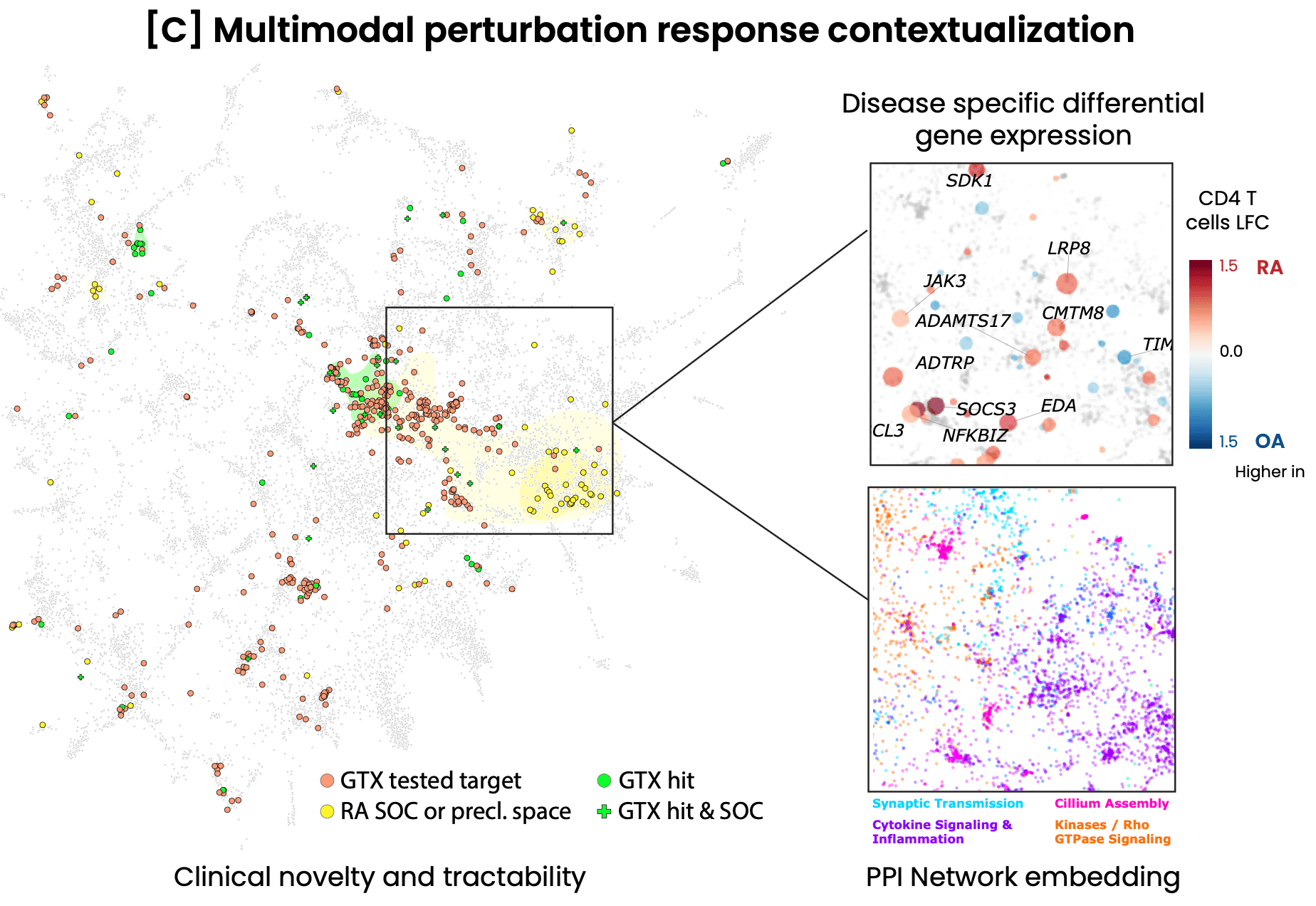
Among more than 160 standard-of-care drugs and tool compounds, the JAK inhibitor baricitinib reduced T cell activation across backgrounds, while the cholesterol-lowering drug atorvastatin did so mainly in RA synovial fluid. Combining such responses with known drug targets and protein interactions, we prioritized targets, tested compounds against them, and selected several promising candidates that act in RA synovial fluid for further validation.